ELENA MASHKOVA: Artist Concept, Method and Practice
I'm drawn to forms that last — sailing ships, Akhal-Teke horses, wild cats, the human figure. They carry something across time that doesn't fade.
I want to see what centuries of nature and human work have compressed into them. Their clarity, their completeness, their quiet endurance. You don't catch that in a glance — which is why I've been following some of these subjects for over a decade, others my whole life.
I work with photography, drawing, painting, and film. Light, scale, distance. Sometimes I reduce, sometimes I zoom in. Each approach opens something different.
Several themes running in parallel may look like a distraction, but in practice they feed each other. They offer angles you don't see from inside one subject.
My process is long-term: expeditions, archives, being there. The images grow from observation, not from a preconceived idea.
I call this CULTURAL STRATA — a way of engaging with forms that hold human and natural memory. The goal is not to explain, but to let the viewer see. Attention shifts from reading to looking. Familiar things become unfamiliar. And I try to show what keeps me returning to them
ELENA MASHKOVA
I work within an ongoing artistic concept, method and practice called CULTURAL STRATA.
At the core of my work is a simple question: how does accumulated human experience remain present within contemporary life?
Rather than viewing history as a sequence of completed periods, I see the present as a dense convergence of multiple temporal layers. The world around us is shaped not only by current events but also by centuries of knowledge, labour, adaptation, imagination, and cultural transmission that continue to operate through the forms we inherit.
My practice investigates those forms.
I am drawn to subjects that embody a particularly concentrated relationship between nature, culture, and time: historical sailing ships, Akhal-Teke horses, wild cats, the human body, and traditional nomadic cultures. Although these subjects may appear unrelated, I approach them as manifestations of a shared phenomenon. Each carries knowledge that extends beyond its immediate function. Each preserves traces of long-term human experience. Each continues to shape contemporary perception in ways that often remain unnoticed.
My interest is not historical reconstruction and not nostalgia. I am less concerned with what these forms once were than with what they continue to do.
A sailing ship no longer dominates global transportation, yet it still embodies ways of navigating uncertainty, responsibility, cooperation, and attention. An Akhal-Teke horse is not merely a rare breed but a living relationship that demands patience, consistency, observation, and mutual trust. Traditional cultures, animals, and even the human body itself contain forms of knowledge that exceed their visible appearance.
Over time I came to understand that forms do not simply preserve memory. They preserve ways of being.
They transmit habits of perception.
They cultivate particular relationships between human beings and the world.
When forms disappear, it is not only objects that are lost. Entire modes of experience may disappear with them.
This realization became one of the foundations of CULTURAL STRATA.
My work therefore focuses on continuity rather than preservation. I do not seek to freeze the past. I am interested in understanding how inherited forms continue to participate in the making of the present and the future.
Research is central to my practice. Fieldwork, travel, archives, libraries, observation, and long-term immersion form a continuous process. Many of my projects develop over decades rather than years. Photography, drawing, and painting function as complementary research tools through which I investigate the relationship between form, memory, and transmission.
Visually, I often work through reduction. By simplifying composition, limiting colour, and using atmosphere, scale, light, and space, I seek to remove distraction and reveal underlying structures. My goal is not to document appearances but to uncover what remains essential.
Ultimately, CULTURAL STRATA is an exploration of continuity.
It asks how experience survives through form, how knowledge moves across generations, and how the past continues to participate in shaping the future.
Above all, it is an attempt to recognize the dignity of forms that continue to carry meaning across time
ELENA MASHKOVA
My work investigates how the past continues to exist within the present.
Projects pages: THE SAILS, MANUL, THE HORSE: Akhal-Teke by Elena Mashkova
My artistic practice is a visual archaeology of memory, driven by my proprietary, interdisciplinary method: CULTURAL STRATA. I operate on the premise that time is non-linear. The past does not fade or distance itself from us; instead, millennia of planetary and cultural experience compress under the weight of centuries, forming the ultra-dense matrix of our present day.
As an artist, I look past the fleeting aesthetic of the moment to uncover the deep, enduring codes embedded in our collective subconscious. My method deconstructs six core subjects — each an ultimate archetype, representing a pinnacle within its own ecosystem:
- THE SAILS: The vessel as a depersonalized instrument of discovery — human genius suspended between the elements and the void.
- THE EQUINE STRATA: An exploration of the Akhal-Teke horse as a living monolith of pure form and ancient gravity, shaped over thousands of years.
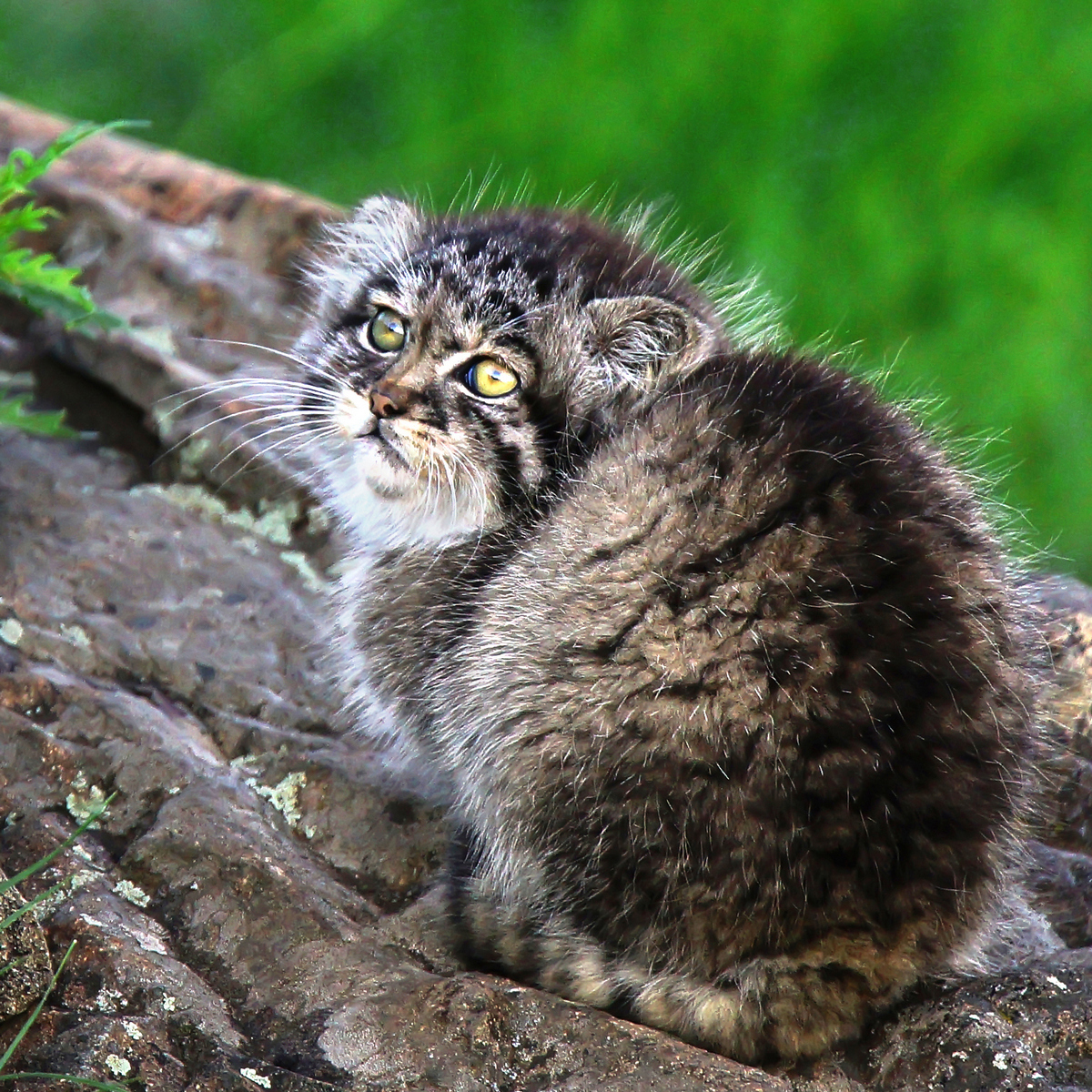
- THE WILD CATS: The snow leopard and the manul as embodiments of nature’s sacred, untouchable solitude — living spirits of the landscape completely detached from modern noise.
- THE NOMADIC LIFEWAYS: A comparative study of Nenets and Mongolian traditions — human existence operating in deep harmony with natural rhythms, where daily survival is elevated to a ritual of timelessness.
- THE BORZOI: An investigation into the aristocratic geometry of the Russian Borzoi — a centuries-old lineage of speed, power, and living sculpture.
- THE BODY: A deconstruction of the nude form through raw, expressive colored pastel drawings. I strip away conventional eroticism to reveal pure metaphysical abstraction, presenting the human body as our most ancient biological relic, built to endure.
My pieces serve as focal points where the viewer encounters the accumulated energy of generations. The CULTURAL STRATA method is my way of capturing the world not in its transience, but in its absolute, concentrated essence
Elena Mashkova
Elena Mashkova is an artist and researcher and the founder of CULTURAL STRATA, a long-term artistic practice exploring how cultural memory persists within contemporary life. Through photography, drawing, and painting, she investigates subjects including sailing ships, horses, wild cats, traditional communities, and the human body. Combining archival research with extensive fieldwork, her work examines forms that retain integrity and cultural significance across time.
Through long-term artistic research, Mashkova investigates how historical, cultural, and natural layers continue to exist within contemporary reality. Her work focuses not on events but on enduring structures that persist across time.
Photography, drawing, and painting operate within her practice as analytical tools. Through the use of form, light, scale, and visual reduction, she seeks to reveal structures that persist despite changing historical circumstances.
Individual projects, including THE HORSE, THE CAT, THE BODY, THE SAILS, and long-term studies devoted to horses, wild cats, maritime environments, and traditional cultures, constitute distinct branches of a broader investigation.
CULTURAL STRATA is an artistic investigation of the presence of the past within the present